First-time shippers often imagine they will get the same kind of tracking they get from a pizza app or a rideshare. Open the screen, watch a small icon glide across the map, and know to the minute when the vehicle is going to arrive at the curb. That is the mental picture most customers start with.
The reality of auto transport tracking works differently. The technology behind a car transport tracking system is real, the GPS is real, and the dispatch software is real. But moving a vehicle across several states involves variables that no consumer app has to deal with. This guide explains exactly how vehicle shipment tracking works behind the scenes, what kind of real-time transport visibility customers actually receive, and how to read the updates that come from carriers and dispatch teams during a long-distance move.
How GPS Tracking Works in Auto Transport
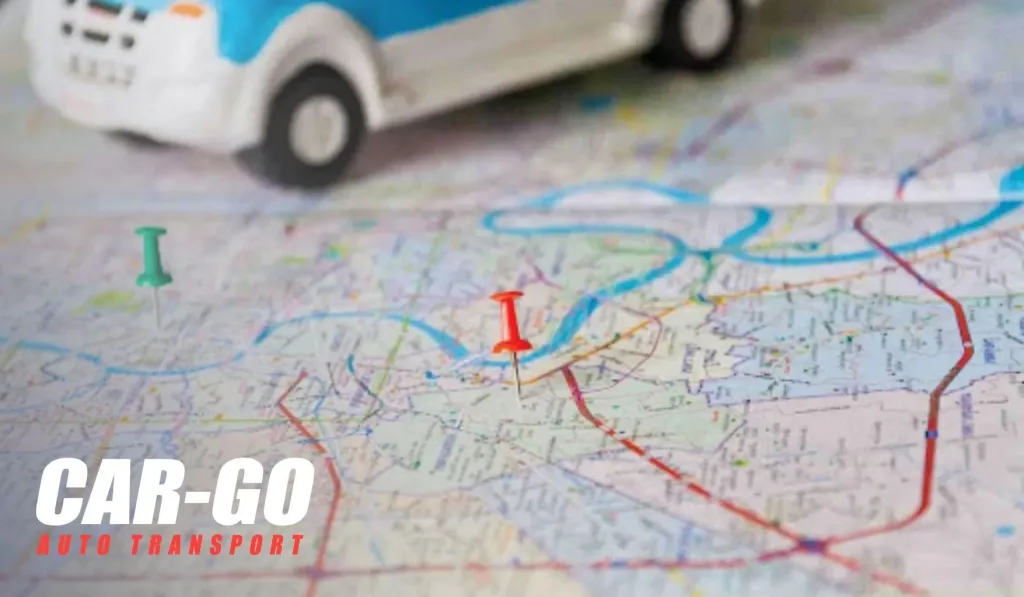
Every modern car shipping tracking system relies on GPS in some form. The difference between providers is not whether GPS is involved, but how the data is captured, how often it refreshes, and how it reaches the customer through a vehicle transport portal, a text message, or a phone call from the broker.
Two GPS-based methods do most of the work in auto transport tracking today.
ELD-Based GPS From the Carrier Truck
Every commercial carrier on the road operates with an Electronic Logging Device, or ELD, installed in the cab. ELDs were mandated by federal regulation to monitor driver hours and reduce fatigue-related accidents, and they continuously record the truck’s GPS location, speed, and duty status.
Once a vehicle is loaded onto a carrier, the ELD provides a steady GPS breadcrumb trail of the truck’s movement. Location data is generated automatically as the truck moves along interstates and major routes, which is why brokers in the auto transport industry lean on ELD feeds for long-haul transport monitoring. The data is reliable, hands-free, and tied directly to the truck rather than to an app a driver has to open.
The trade-off is refresh rate and detail. ELD location data typically updates every couple of hours rather than every couple of minutes. The system shows where the truck is, but not always why it has stopped. A pause at a rest area, fuel stop, or terminal may show up as a stationary truck without a labeled reason.
App-Based Location Pings and Dispatch Software
Many carriers supplement ELD feeds with dispatch software and smartphone apps that ping GPS coordinates at set intervals. These tools sit on top of the ELD layer and add manual touchpoints, so drivers can mark milestones like vehicle loaded, state line crossed, or final approach to delivery.
App-based pings provide more granular location data than ELDs alone, but it is still not live tracking in the consumer tech sense. Pings happen on a schedule. Between pings, customers see the last known location, which may already be slightly outdated. Manual updates from the driver fill in the gaps, especially around pickup and delivery.
Do Car Shipping Companies Offer Real-Time Tracking?
This is the question most customers really want answered. The short version: yes, car shipping companies offer tracking, but real-time means something different in auto transport than it does in food delivery.
In auto transport, real-time transport visibility usually means a customer can see meaningful shipment status updates as the truck moves through the route, rather than a constantly refreshing dot on a map. Some carriers offer a vehicle transport portal where customers can log in and view recent location data tied to the VIN. Others rely on the broker to pass along updates by text, email, or phone. For snowbird shipments heading south for the winter, for example, customers usually get pickup confirmation, a midpoint check-in, and an approach notification rather than minute-by-minute pings.
Constant pings sound appealing, but they tend to create noise rather than information. A location dot that has not moved in two hours does not tell a customer whether the driver is sleeping, fueling, eating, or waiting for a delivery slot at another stop. Meaningful tracking answers the questions customers actually have: is the car safe, is it moving, and when will it arrive.
Why ETAs Shift During Transit
The estimated delivery time given at booking represents the best-case scenario based on average transit times and standard routing. Real-world transit rarely matches the plan exactly, and a good car transport tracking system will reflect those shifts rather than hide them.
Common factors that move the ETA include:
- Federal hours-of-service regulations that require mandatory rest periods
- Construction zones, traffic congestion, and lane closures
- Loading delays at earlier pickups when carriers handle multiple vehicles
- Weather conditions that affect safe driving speed
- Terminal bottlenecks at transfer points or yards
Each variable chips away at the original ETA. A driver approaching the daily hours limit may stop earlier than planned. A late first pickup affects the entire schedule. These adjustments happen for safety and logistical reasons, and they are part of how professional dispatch teams keep the load moving without putting anyone at risk.
How Drivers and Dispatch Teams Send Updates

The tracking customers see is the visible layer. Underneath it sits a constant flow of carrier dispatch updates, driver check-ins, and logistics tracking notes that move between the driver, the dispatch team, and the broker. Understanding this layer helps explain why some updates come instantly while others take a few hours.
From the Driver
Drivers send updates in two ways. The first is automatic through the ELD and any dispatch software running on their phone or in-cab tablet. Location, duty status, and route data flow upstream without the driver needing to do anything. The second is manual, where drivers send a quick note or call dispatch when they hit a milestone such as vehicle loaded, state line crossed, or final approach to the delivery address.
Manual updates are valuable around pickup and delivery, but they depend on the driver remembering to send them while juggling other vehicles and the realities of the road. That is one reason a broker who actually answers the phone matters more than a flashy app.
From the Dispatch Team
Dispatch teams sit at the center of the tracking flow. They monitor ELD feeds, dispatch software, and direct communication with drivers across the entire fleet. When a customer asks about a specific shipment, the dispatch team can pull the most recent GPS ping, check the driver’s planned route, and reach out by phone or message for any context the data cannot show.
Dispatch is also where weather risk gets evaluated. Storm tracks, wildfire perimeters, and Department of Transportation advisories are reviewed multiple times a day. When a route turns risky, dispatch reroutes the truck proactively rather than letting it drive into trouble. A reroute usually extends the original ETA, but the alternative of driving through hazardous conditions creates far bigger risks for the vehicle and the driver.
From the Broker
The broker is usually the customer’s main point of contact during transit. Brokers receive a combination of automatic ELD feeds, dispatch software updates, and direct messages from carriers. They translate that raw data into plain-language updates customers can actually use.
Strong broker and carrier communication reduces surprises at delivery. When carriers and brokers maintain open lines, issues get flagged early. A damaged loading ramp at pickup gets reported before it causes delays. Weather concerns get discussed before they force a reroute. Customers hear about changes from a real person rather than discovering them through a missed delivery window.
What Information Customers Receive During Transit
Customers should know exactly what to expect from their car shipping tracking system before the vehicle is loaded. Clear expectations prevent unnecessary anxiety and make legitimate updates easier to spot.
Standard Shipment Status Updates
Most reputable providers deliver shipment status at the following points:
- Pickup confirmation once the vehicle is loaded onto the carrier
- A midpoint update during multi-day, long-distance transports
- Notification when the carrier enters the delivery region
- A direct call or text when the driver is approaching the delivery address
These are the meaningful moments of vehicle shipment tracking. Each one corresponds to a decision the customer may need to make, such as scheduling time off work, alerting a neighbor, or coordinating an HOA gate code.
Geofencing and Milestone Notifications
Many modern car transport tracking systems use geofencing to trigger automatic shipment status updates at specific points along the route. Instead of a steady stream of pings, customers receive alerts when the truck actually crosses meaningful boundaries.
Typical geofence triggers include pickup confirmation after loading, state line crossings on long-distance shipments, arrival in the delivery region, and final approach. Milestone-based notifications cut down on noise and make every update worth reading.
How Updates Are Delivered
SMS works best for time-sensitive updates because almost everyone reads a text quickly. Email suits detailed information such as a pickup inspection report or delivery instructions. A vehicle transport portal, where available, gives customers an on-demand view of recent location data and milestone history. Voice calls handle the moments that need a real conversation, such as a route change or a delivery timing adjustment.
Fewer, clearer estimated delivery updates build more trust than constant pings. When a company sends a message, customers know it contains information worth reading rather than another automatic ping showing the truck still sitting at a rest stop.
Why Vehicle Tracking Improves Delivery Accuracy
Auto transport tracking is not only about customer reassurance. The same GPS data, dispatch software, and carrier dispatch updates that customers see also drive better delivery accuracy on the operations side.
Better Routing and Risk Management
Continuous GPS data lets dispatch teams adjust routes in response to traffic, weather, and federal hours-of-service limits. A truck approaching a closed corridor can be redirected before it loses time waiting in a backup. A driver running out of available hours can be matched to a nearby rest area rather than being stuck on the shoulder.
Better routing also matters for higher-value shipments. Enclosed transport for luxury and high-end vehicles depends heavily on logistics tracking, since these moves often involve narrower delivery windows and stricter handling expectations. The tracking layer keeps everyone aligned on where the vehicle is and when it will arrive.
Faster Issue Resolution
When something goes wrong on the road, real-time transport visibility shortens the response window. A mechanical issue, a road closure, or a pickup that runs long all get flagged early through dispatch software. The broker can update the customer before frustration builds, and the carrier can adjust the rest of the route without losing the whole day.
This is the practical value of a good car transport tracking system. Tracking is not entertainment. It is a coordination tool that keeps brokers, carriers, and customers on the same page when conditions shift.
VIN-Level Accountability
Every shipment is tied to the vehicle’s VIN, which means dispatch teams and brokers can pull up the exact unit on a carrier without ambiguity. VIN tracking matters most when a single truck is carrying multiple vehicles for different customers. When a driver reports a milestone for one VIN, that update belongs to that specific customer, not to anyone else on the load.
VIN-level accountability also supports inspection records at pickup and delivery, since the condition report attached to that VIN follows the vehicle from origin to destination.
What Good Tracking Looks Like for Customers

Rather than focusing on a feature list, customers should evaluate tracking quality based on practical outcomes.
Markers of reliable tracking:
- Clear pickup confirmation with driver contact information
- Honest ETA ranges instead of overly precise times that will not hold
- Proactive updates when conditions change on the road
- One accountable point of contact throughout the process
- A simple way to reach a real person, not just a chatbot or an app
A broker who provides an ETA range is acknowledging the realities of auto transport logistics. Ranges account for the variables that affect timing. Customers should not have to chase down multiple people for basic information about their shipment. A dedicated contact person who knows the account provides consistent, reliable estimated delivery updates from pickup to drop-off.
Car-Go Auto Transport keeps customers connected to a real point of contact during every shipment, so questions about location, ETA, or delivery timing get answered by someone who has the full picture rather than a generic support queue.
Final Takeaway: Accuracy Beats Constant Pings
Real-time tracking in auto transport is not about watching an icon crawl across a map. It is about receiving accurate information at meaningful moments and trusting that the people behind the screen actually know what is happening with the vehicle.
The best car transport tracking system combines layers. ELD data provides the GPS foundation. Dispatch software and apps add granular location pings and manual driver milestones. Geofencing turns key moments into automatic shipment status alerts. And human communication from dispatch and the broker fills in the context that automated systems cannot capture.
Before booking transport, ask potential providers specific questions:
- How often will I receive updates during transit?
- What kind of events trigger an automatic notification?
- Who handles customer questions while my vehicle is on the road?
- How quickly does your team respond when something changes?
- Do you offer a vehicle transport portal, text updates, or both?
Choose providers who prioritize transparency over hype. Companies that promise live tracking without explaining the limits often create unrealistic expectations. Providers who clearly describe what customers will and will not see, then deliver on those commitments, build the kind of trust that matters when shipping a valuable vehicle across the country.
Frequently Asked Questions
Ready to Ship Your Vehicle With Real Tracking and Real Communication?
Get auto transport with a car transport tracking system built on layered GPS data, responsive dispatch, and direct broker communication. Request a free quote today and ship your vehicle with a team that keeps you informed at every meaningful moment of the journey.
About the Author: Malachi Flesher
