OEM stands for Original Equipment Manufacturer. In the automotive context, it refers to the companies that design and produce vehicles under their own brand names, including Ford, General Motors, Toyota, BMW, and other major manufacturers. OEM logistics is the system that companies use to move finished vehicles from production facilities into their dealer networks.
The logistics chain involves multiple parties. Manufacturers work with third-party logistics providers, rail carriers, port operators, regional distribution centers, and final-mile auto transport companies to coordinate the movement of vehicles across the country and internationally.
Why Vehicle Logistics Matter
Efficient vehicle logistics has a direct impact on dealership operations and customer experience. When the supply chain runs smoothly, dealers maintain the right inventory mix, fulfill customer orders faster, and reduce carrying costs on vehicles sitting idle. When the chain breaks down, dealers face allocation shortages, delayed deliveries, and dissatisfied buyers.
For manufacturers, logistics efficiency also affects production planning. Vehicles that move quickly through the distribution pipeline free up capacity at staging yards and allow factories to maintain production schedules without creating bottlenecks downstream.
The Journey From Factory to Dealership
Vehicle Production and Assembly
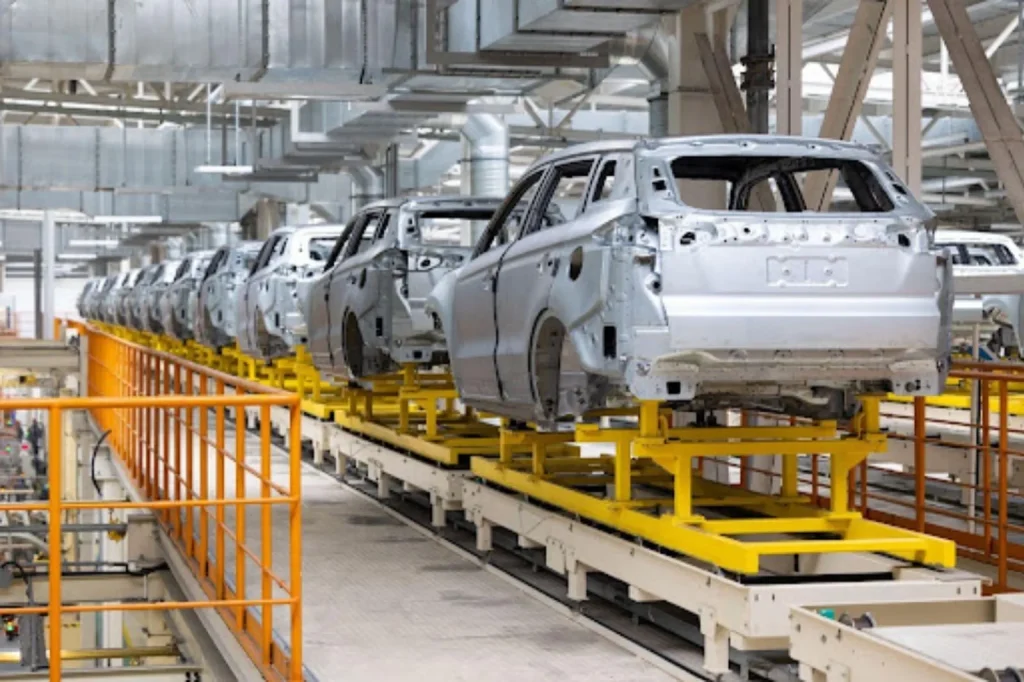
Vehicle manufacturing involves hundreds of components sourced from global suppliers, assembled across multiple production stages, and finished with powertrain installation, body paint, and interior outfitting. Once a vehicle reaches the end of the assembly line, it undergoes a series of quality control inspections before receiving a factory release authorization.
Final inspection covers mechanical systems, electrical components, software calibration, exterior finish, and structural integrity. Vehicles that pass are assigned a VIN, documented, and transferred to the staging area for transportation planning. Vehicles with defects are flagged for repair before being cleared for shipment.
Vehicle Staging and Inventory Management
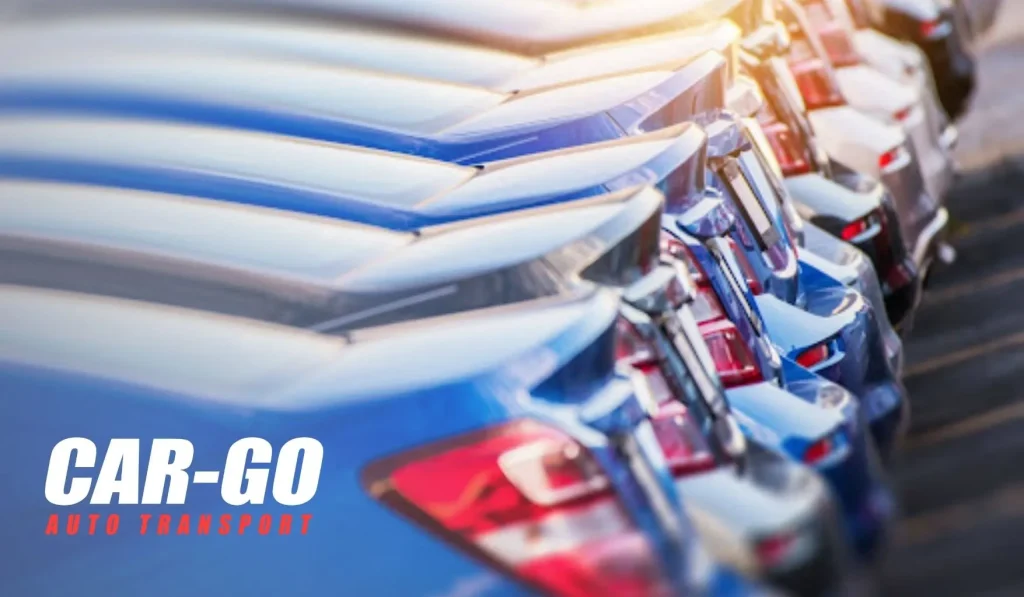
After factory release, vehicles move to large staging yards adjacent to manufacturing facilities. These yards hold thousands of vehicles at a time, organized by model, trim level, and destination. VIN tracking begins at this point, allowing manufacturers to monitor each unit as it moves through the distribution chain.
Logistics coordinators use shipment scheduling systems to match vehicles with carrier assignments based on route availability, dealer allocation orders, and transportation capacity. Distribution planning at this stage determines whether a vehicle travels by rail, truck, or a combination of both.
Step 1: Factory Release and Transportation Planning
Vehicle Allocation
Manufacturers do not ship vehicles to dealers randomly. Allocation is a structured process driven by regional demand data, historical sales performance, dealer capacity, and manufacturer incentive programs. Each dealer in a network receives a predetermined mix of models and configurations based on their market profile.
Regional demand forecasting uses sales history, population trends, competitive data, and economic indicators to project what vehicles each market needs. Manufacturers adjust allocations periodically based on real-time sales data, ensuring that high-demand markets receive adequate inventory while slower markets are not over-supplied.
Logistics Coordination
Once allocations are finalized, logistics teams schedule shipments. Carrier assignments are made based on route coverage, available capacity, and delivery timeline requirements. Route optimization balances the need for speed with the economics of load consolidation, particularly for rail transport, where larger volumes reduce per-unit costs.
Capacity planning accounts for seasonal fluctuations in transportation demand, carrier availability, and known disruptions such as port congestion or weather events. Effective logistics coordination at this stage is what separates manufacturers with reliable dealer inventory from those who struggle with chronic delays.
Step 2: Long-Distance Transportation
Rail Transport
Rail is the dominant mode of long-distance vehicle transportation in North America. Autorack cars, which are multi-level enclosed rail cars designed specifically for vehicle transport, can carry up to a dozen vehicles per car and hundreds per train. This capacity makes rail significantly more cost-efficient than trucking for cross-country distribution.
Major automotive rail corridors connect manufacturing hubs in the Midwest and South to distribution points on both coasts. Toyota, GM, Ford, and other manufacturers maintain long-term agreements with Class I railroads to secure dedicated capacity throughout the year.
Truck Transport
Multi-vehicle auto transport carriers handle the regional distribution leg that rail cannot reach. Open carrier trucks typically move between six and ten vehicles per load, while enclosed carriers handle fewer but offer additional protection for premium and high-value models. For a deeper look at how these two modes compare across the full shipping chain, see truck vs. rail for long-distance car shipping.
For time-sensitive deliveries, manufacturers and logistics providers use dedicated trucking lanes with confirmed scheduling rather than spot-market capacity. Regional carriers often specialize in specific geographic corridors, thereby improving delivery reliability and reducing transit variability.
Ocean Freight for Imported Vehicles
Vehicles manufactured outside the United States travel on roll-on/roll-off vessels, which are purpose-built cargo ships designed to carry wheeled cargo. Vehicles are driven directly onto the ship at the origin port and driven off at the destination port, minimizing handling and reducing the risk of damage during transit.
Port operations include vehicle offloading, customs clearance, and initial inspection. Customs processing times vary by port and country of origin, and delays at this stage can create ripple effects throughout the downstream distribution chain. Port vehicle processing centers, known as PDCs, handle the intake of imported vehicles before they enter the domestic distribution network.
Step 3: Vehicle Processing Centers (VPCs)
What Is a Vehicle Processing Center?
A Vehicle Processing Center, commonly called a VPC or PDC, is a facility where vehicles are received, inspected, and prepared for final delivery to dealerships. These centers function as quality checkpoints and staging hubs within the distribution network. They are often located near major rail terminals, port facilities, or in high-density dealer markets.
VPCs can hold thousands of vehicles at a time and employ specialized technicians to perform pre-delivery services. The time a vehicle spends at a VPC depends on the services required and the volume of vehicles moving through the facility.
Common Services Performed at VPCs
Vehicle processing centers handle a range of preparation tasks before vehicles move to dealerships:
- Final quality inspections for transport damage and manufacturing defects
- Software updates and firmware installations for onboard systems
- Accessory installation, including dealer-ordered packages and manufacturer add-ons
- Removal of protective coatings, wrapping films, and transit strapping
- Battery conditioning and fluid top-offs for vehicles that sat in transit
- Minor cosmetic repairs for surface scratches or paint imperfections
Vehicles cleared at the VPC are then assigned to outbound carrier loads for final delivery to the destination dealership.
Step 4: Final Delivery to the Dealership
Last-Mile Vehicle Transportation
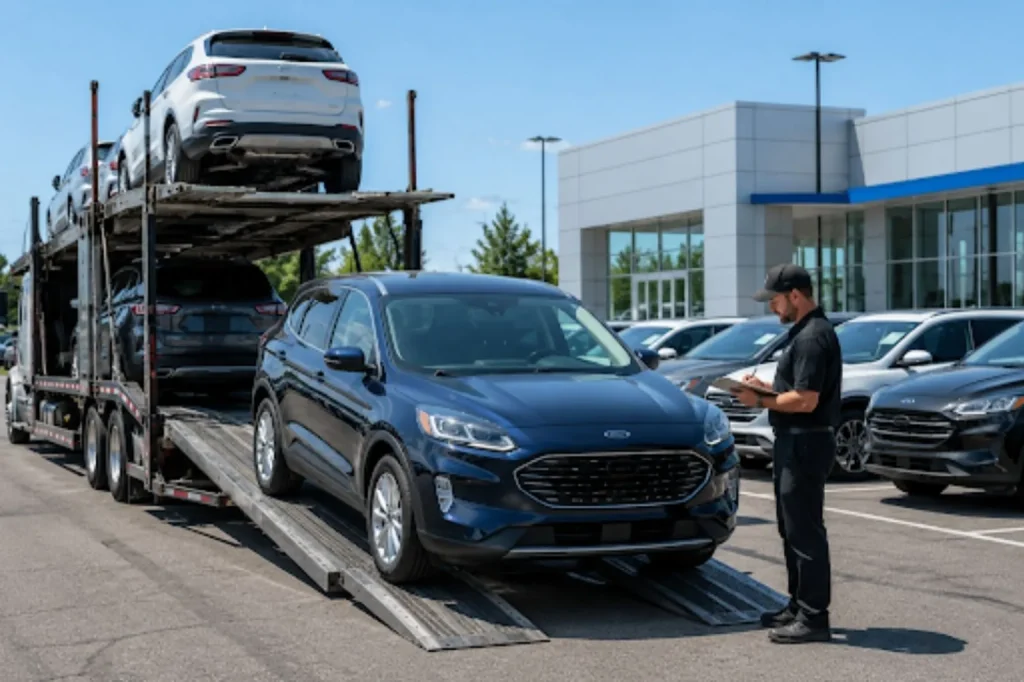
The final leg of the journey is handled by regional auto transport carriers. These carriers pick up vehicles at VPCs, rail ramps, or distribution yards and deliver them directly to dealership lots. Scheduling is coordinated between the logistics provider, carrier, and dealership to ensure vehicles arrive during business hours with staff available to receive them.
Route optimization at this stage accounts for dealership location, lot access, carrier scheduling windows, and local delivery regulations. Urban dealerships with limited lot access may require specialized delivery arrangements, while rural dealerships are served by carriers with broader geographic coverage. For a full overview of how dealerships manage the inbound and outbound shipping process, the dealership auto transport guide covers the operational side in detail.
Vehicle Arrival and Inspection
When vehicles arrive at the dealership, the receiving process begins immediately. Lot staff inspects each vehicle against the Bill of Lading, documenting any damage that occurred during transit. Any discrepancies are noted and filed with the carrier to initiate a claims process.
Vehicles that pass receiving inspection are logged into the dealer management system (DMS), assigned inventory numbers, and prepped for the sales floor. Pre-delivery inspection (PDI) is a separate process some dealers perform to ensure vehicles meet customer delivery standards before they are sold.
How Technology Powers Modern Vehicle Logistics
Vehicle Tracking Systems
Modern automotive logistics relies on VIN-level tracking to provide visibility throughout the supply chain. Manufacturers, logistics providers, and dealerships can monitor the location and status of individual vehicles from factory release through final delivery. GPS monitoring on carriers provides real-time shipment visibility, reducing uncertainty for dealers managing inventory arrival timelines.
Some manufacturers integrate their tracking systems with dealer inventory platforms, allowing salespeople to provide customers with accurate delivery estimates for vehicles in transit. This level of visibility reduces speculation and builds buyer confidence during the ordering process.
Logistics Management Platforms
Transportation management systems (TMS) coordinate carrier assignments, route optimization, and shipment scheduling across the entire distribution network. These platforms aggregate data from rail carriers, trucking companies, port terminals, and VPCs into a centralized view that logistics managers use to identify bottlenecks and adjust capacity in real time.
Automated dispatching tools reduce the manual coordination burden by matching vehicle loads with available carriers based on route compatibility, delivery windows, and cost parameters. As automation matures, dispatch decisions that previously required manual intervention are increasingly handled algorithmically.
Data Analytics and Demand Planning
Predictive analytics tools help manufacturers and logistics providers anticipate demand shifts before they create supply problems. By analyzing historical sales data, regional economic signals, and seasonal patterns, demand planning systems generate forecasts that inform production scheduling, carrier capacity agreements, and distribution center staffing.
Inventory optimization models identify vehicles that are likely to age on dealer lots and flag rebalancing opportunities, allowing manufacturers to redirect units from oversupplied markets to high-demand areas before they become a problem.
Common Challenges in OEM-to-Dealership Vehicle Logistics
Supply Chain Disruptions
The automotive supply chain is exposed to a range of disruptions that can slow or halt vehicle production. Parts shortages, labor disputes at manufacturing plants or supplier facilities, port congestion, and raw material constraints all affect how many vehicles reach the distribution pipeline. The semiconductor shortage that affected the industry in 2021 and 2022 demonstrated how a single component category can constrain output across the entire industry.
Transportation Capacity Constraints
Even when vehicles are produced on schedule, getting them to dealers depends on available transportation capacity. Driver shortages in the trucking industry reduce the number of loads that can be dispatched on any given day. Rail congestion at major terminals slows the movement of autorack cars across key corridors. Seasonal demand spikes, such as increased vehicle movement in spring and early fall, create carrier availability challenges that drive up spot-market costs.
Weather and Seasonal Impacts
Severe weather events disrupt vehicle logistics at multiple points. Hurricanes and flooding can shut down port operations, damage staging yards, and close major highway corridors. Winter storms delay rail transit and make it difficult for final-mile carriers to reach dealerships in affected markets. Port disruptions on the West Coast, where a disproportionate share of imported vehicles enter the country, can back up supply chains for weeks.
Inventory Imbalances
Allocation mismatches between high- and low-demand markets create situations in which some dealers are short on popular models while others hold excess inventory they cannot move quickly. Regional allocation challenges become particularly acute during production constraints, when manufacturers must prioritize limited output across competing market needs. Rebalancing inventory between dealer locations adds transportation cost and time to the distribution equation.
How Efficient Vehicle Logistics Benefits Dealerships
Faster Inventory Turnover
Vehicles that move through the distribution chain quickly arrive on dealer lots with more selling time before they age into lower-margin inventory tiers. Faster turnover reduces the cost of holding vehicles and improves the overall profitability of each unit sold.
Improved Customer Satisfaction
When dealers can reliably forecast when ordered or in-transit vehicles will arrive, they set accurate expectations with customers. Delivery predictability reduces customer frustration and strengthens the buying experience, particularly for buyers who placed factory orders and are waiting on a specific vehicle.
Better Vehicle Availability
Efficient logistics ensures that dealers maintain an adequate mix of models, trim levels, and configurations to meet customer demand. When the supply chain is performing well, dealers spend less time managing shortfalls and more time converting buyers who walk in ready to purchase.
Reduced Transportation Costs
Optimized routing, load consolidation, and carrier efficiency reduce the per-unit transportation cost embedded in each vehicle. These savings flow through to dealerships in the form of lower invoice pricing and, ultimately, to buyers, who benefit from more competitive dealer pricing.
Greater Supply Chain Visibility
Dealers with real-time visibility into vehicle location and estimated arrival can manage their lot operations, staffing, and marketing activities more effectively. Knowing which vehicles are three days out versus three weeks out allows dealer teams to prepare pre-delivery documentation, schedule customer deliveries, and plan lot space accordingly.
The Role of Auto Transport Companies in Dealer Vehicle Delivery
Regional Distribution Services
Auto transport companies serve as the final link in the OEM-to-dealership distribution chain. After vehicles clear VPCs or rail ramps, regional carriers handle last-mile delivery to get units onto dealer lots. These carriers operate within defined geographic corridors and maintain the scheduling flexibility that large rail networks cannot provide. For manufacturers and dealer groups that require consistent, high-volume support across multiple locations, corporate fleet transportation services provide the dedicated coordination those operations require.
Multi-Vehicle Carrier Transport
Open multi-vehicle carriers are the workhorses of regional dealer delivery. A single carrier load can include vehicles bound for multiple dealerships along a common route, reducing per-unit costs while maintaining delivery efficiency. For a broader look at how these logistics patterns apply across large dealer groups and corporate fleets, see fleet and dealership auto transport solutions. For higher-value models, manufacturers or dealers may specify enclosed transport to protect against road debris and weather exposure during the final delivery leg.
Time-Sensitive Deliveries
When a dealer has a customer waiting on a specific vehicle, time-sensitive delivery becomes a priority. Expedited transport options allow logistics providers to schedule dedicated loads or prioritize specific VINs for early dispatch. Car-Go Auto Transport works with dealer networks to coordinate time-sensitive deliveries, ensuring vehicles reach the right location on the tightest schedules.
Inventory Rebalancing Between Dealerships
Auto transport companies also facilitate dealer-to-dealer transfers when inventory needs to be rebalanced within a regional network. A dealership with excess inventory of a particular model can transfer units to a nearby location with stronger demand, without waiting for the manufacturer to adjust its allocation. These dealer trades require reliable carrier partners who can execute same-day or next-day pickups with precision. Dealer groups operating in major automotive markets such as Detroit rely on regional carrier networks precisely for this kind of rapid, flexible inventory movement.
Trends Shaping the Future of Automotive Logistics
Electric Vehicle Distribution
Electric vehicles introduce new logistics requirements that traditional distribution networks were not built to accommodate. Battery charge management during transit, specialized handling procedures for high-voltage systems, and the need for charging infrastructure at staging yards and VPCs all require investment and adaptation. As EV sales volumes increase, logistics providers are developing dedicated protocols for handling electric vehicles across the distribution chain.
Increased Supply Chain Visibility
Real-time visibility is becoming a baseline expectation rather than a differentiator in automotive logistics. Manufacturers, dealers, and buyers increasingly expect to know exactly where a vehicle is at every point in the distribution process. Investment in GPS tracking, IoT sensors, and platform integrations is accelerating as the industry responds to this demand.
AI-Powered Logistics Planning
Artificial intelligence is being applied to route optimization, demand forecasting, carrier matching, and inventory rebalancing across the automotive distribution network. AI-driven systems can process far more variables than traditional planning tools, identifying efficiencies and anticipating disruptions that human coordinators would miss. Early adopters are reporting measurable reductions in transit times and transportation costs.
Sustainability and Transportation Efficiency
Environmental pressure is driving manufacturers and logistics providers to reduce the carbon footprint of vehicle distribution. Rail is already significantly more fuel-efficient than trucking on a per-vehicle basis, and investment in rail network capacity is partly motivated by sustainability goals. Electric and hydrogen-powered auto transport carriers are in development, though widespread deployment remains several years away.
Direct-to-Consumer Delivery Models
Some manufacturers are experimenting with direct-to-consumer delivery, bypassing the traditional dealer network for certain vehicle categories. While the full-scale adoption of this model faces regulatory and franchise law challenges in many states, it is pushing the broader industry to rethink how last-mile delivery works and what role traditional dealerships play in the distribution chain.
What the OEM-to-Dealership Supply Chain Means for Your Operation
The journey from factory to dealership lot is rarely a straight line. It moves through staging yards, rail corridors, port terminals, processing centers, and regional carriers before a single vehicle reaches a customer. Each handoff in that chain introduces a variable, and the operations that manage those variables well are the ones that keep dealer inventory healthy, customer orders on track, and transportation costs in check.
Whether you are a manufacturer coordinating multi-state distribution, a dealer group managing inbound inventory across several rooftops, or a fleet operator planning vehicle movement at scale, the fundamentals remain the same. Reliable carrier networks, real-time visibility, and logistics partners who understand the automotive supply chain are what separate smooth operations from persistent delays.
Frequently Asked Questions About OEM-to-Dealership Vehicle Logistics
Partner With an Experienced Vehicle Logistics Provider
Efficient OEM-to-dealership vehicle logistics requires careful coordination, reliable transportation networks, and real-time visibility throughout the supply chain. Whether moving vehicles from manufacturing facilities, ports, distribution centers, or between dealership locations, Car-Go Auto Transport helps ensure vehicles arrive safely, efficiently, and on schedule.
Contact our team to discuss customized automotive logistics and vehicle transportation solutions tailored to your dealership or fleet operation.
About the Author: Malachi Flesher
