Running a dealership means keeping vehicles moving: from auction lanes to your lot, from one rooftop to another, and from inventory to the customer’s driveway. When that movement slows down, costs climb and sales stall.
This guide covers the fleet management practices that keep high-performing dealerships operating efficiently, from vehicle acquisition through final delivery.
What Dealership Fleet Management Means for Automotive Businesses
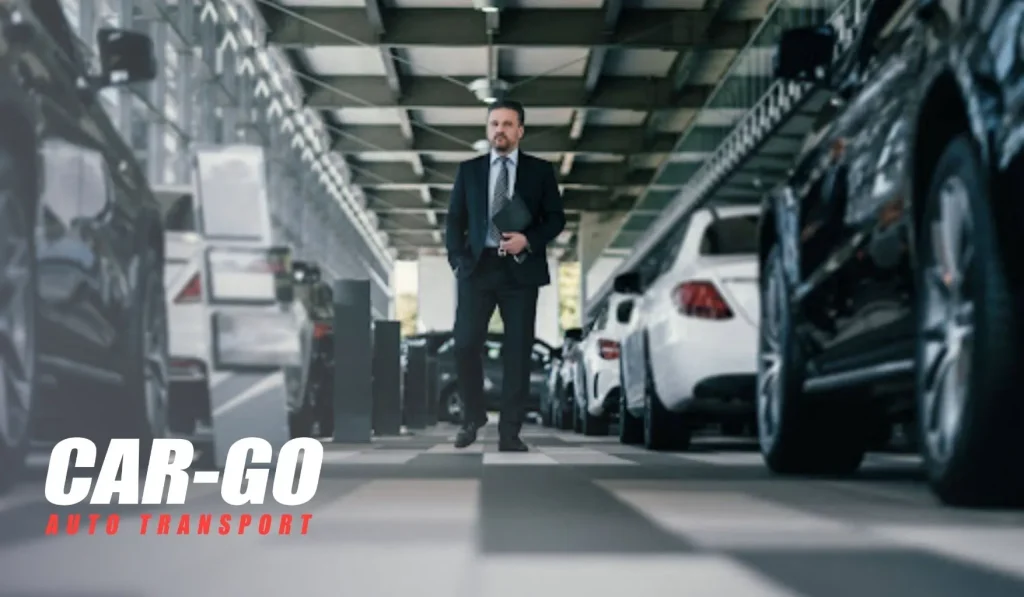
Dealership fleet management is the coordinated process of acquiring, tracking, transporting, and disposing of a dealership’s vehicle inventory. It covers everything from dealer trades and auction pickups to multi-rooftop logistics and remarketing, with the goal of keeping inventory moving, minimizing holding costs, and protecting vehicle condition throughout the supply chain.
Fleet Management in the Automotive Industry
In the automotive industry, fleet management refers to the systems and processes that oversee a dealership’s entire vehicle inventory as it moves through its lifecycle. This includes how vehicles are sourced, transported between locations, tracked on the lot, maintained, and eventually sold or remarketed.
For dealerships, this is not just about keeping records. It is about coordinating logistics, making acquisition decisions based on real-time inventory data, and ensuring that every vehicle arrives at the right place in the right condition at the right time.
How Dealership Fleet Management Differs From Commercial Fleet Operations
Commercial fleet management (for companies running delivery trucks or service vehicles) focuses on operational uptime, fuel efficiency, and maintenance scheduling for vehicles in daily use.
Dealership fleet management is fundamentally different. The vehicles are inventory, not operational assets. The priority is movement and condition preservation, not mileage accumulation. Every day a vehicle sits is a day the holding cost grows.
The Five Pillars of Effective Dealership Fleet Management
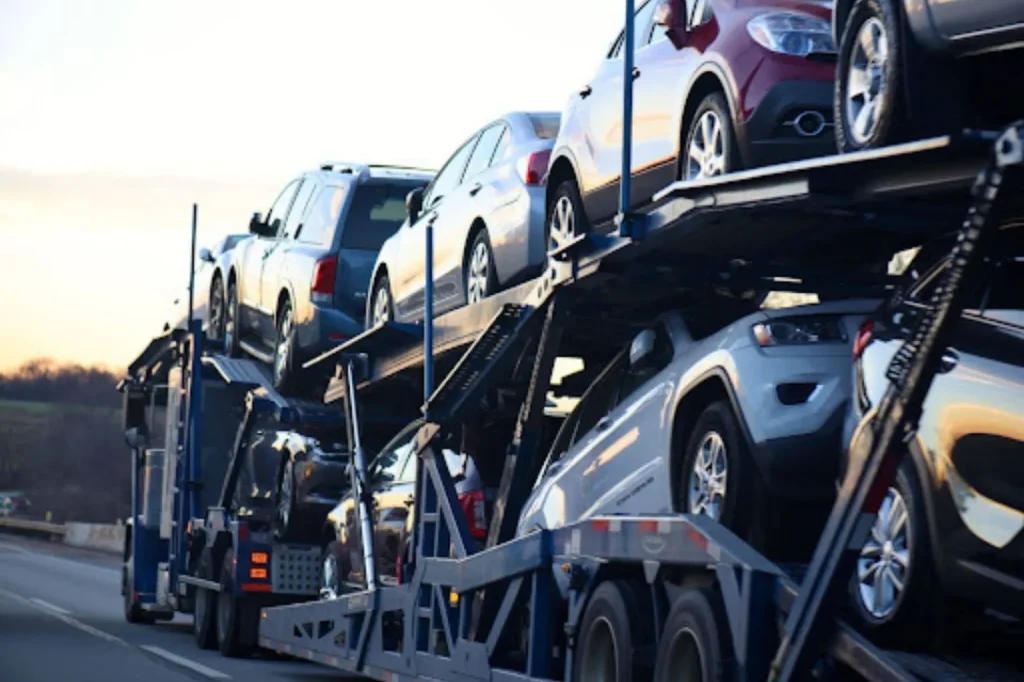
(Filename: dealership-fleet-management-auto-transport-logistics.jpg Alt Text: Dealership fleet management logistics with new vehicle inventory transported on a multi-car carrier trailer)
High-performing dealerships follow a structured approach to managing inventory movement, vehicle turnover, and transportation costs. These five pillars form the foundation of an effective dealership fleet management strategy and help keep inventory moving efficiently from acquisition to sale.
1. Vehicle Acquisition and Inventory Planning
Effective fleet management starts with strategic vehicle acquisition. Dealerships should establish clear buying criteria and understand how inventory sources such as auctions, trade-ins, manufacturer allocations, and dealer trades impact transportation costs and inventory turnover.
2. Vehicle Transportation and Logistics
Vehicle movement directly affects inventory availability, condition, and profitability. Standardized transport processes help dealerships reduce delays, prevent unnecessary mileage, and keep inventory moving efficiently.
3. Inventory Tracking and Visibility
Dealerships need real-time visibility into vehicle location, condition, and availability. Accurate tracking helps prevent inventory bottlenecks, dealer trade delays, and customer delivery issues.
4. Vehicle Lifecycle and Remarketing Management
Every vehicle has a profitability window. Effective lifecycle management helps dealerships determine when to retail, wholesale, transfer, or remarket inventory to maximize returns.
5. Performance Measurement and Cost Control
Successful dealerships track key metrics such as transport costs, delivery times, inventory turn rates, and mileage added during transfers. Measuring performance helps identify inefficiencies and improve profitability.
Common Challenges Dealerships Face When Moving Inventory
Delays Between Dealership Locations
Inter-rooftop transfers are often treated as low-priority logistics. The result is that vehicles sit at the originating location for days while the receiving store waits, a sold customer’s delivery is delayed, or a deal falls through entirely.
Transfers that lack a defined pickup window, a confirmed carrier, and a tracked handoff create operational drag that compounds across a high-volume dealer group.
Excess Mileage on New Inventory
New vehicles that are driven rather than transported between locations arrive with miles that reduce their perceived value and can trigger disclosure obligations in some states. A vehicle that leaves the factory with 12 miles and arrives at the consumer-facing lot with 300 is a harder sell than one that comes off a transporter with 14.
Drive-away arrangements are tempting because they appear cheap. The downstream costs, including customer objections, negotiation concessions, and compliance considerations, often exceed the savings.
Dealer Trades Taking Too Long
A dealer trade is one of the most customer-visible logistics events in a dealership’s operation. When a buyer has selected a specific vehicle at a sister store and is waiting for delivery, every day of delay is a day the deal can unravel.
Dealer trades that rely on informal arrangements, such as a sales associate driving the vehicle over on a slow day or a third party arranged at the last minute, routinely take longer than necessary and arrive with preventable mileage or condition issues.
Auction Purchases Sitting Unmoved
Auction vehicles that are purchased but not immediately transported begin accruing storage fees within days. Delays in arranging transport from Copart, IAA, Manheim, or regional auctions add cost without adding value.
The bottleneck is usually not willingness to move the vehicle. The real issue is not having a transport partner ready to dispatch before the hammer falls.
Limited Internal Staffing for Vehicle Transfers
Smaller dealerships often rely on sales staff, lot attendants, or managers to drive transfers. This pulls productive staff away from revenue-generating activity, creates scheduling conflicts, and leaves the dealership without a documented condition record for the vehicle in transit.
The per-trip cost of internal staffing, when fully loaded with wages, fuel, return transportation, and lost sales time, is rarely cheaper than professional transport at scale.
Best Practice #1: Create a Standardized Vehicle Transfer Process
Establish Clear Transfer Requests
Every vehicle transfer should begin with a documented request that includes the originating location, destination, vehicle identification number, required delivery window, and authorized contact at both ends. Informal requests, such as a text message or a verbal agreement, create ambiguity that causes delays.
A simple internal form or CRM-based workflow eliminates most of the coordination friction that slows down inter-rooftop transfers.
Track Vehicle Status During Transit
Once a vehicle is in transit, the receiving store should have a real-time or near-real-time status update. Professional transport companies provide tracking that allows both parties to know when a vehicle will arrive.
Without transit tracking, the receiving location defaults to repeated calls to the originating store, an inefficient loop that consumes staff time on both ends.
Document Vehicle Condition Before and After Transport
A vehicle inspection report, including photographs, taken at pickup and again at delivery creates an unambiguous condition record. This protects both the originating and receiving dealership in the event of a damage dispute.
Dealerships that skip this step spend significantly more time and money resolving transport-related damage claims than those that document consistently.
Best Practice #2: Reduce Unnecessary Mileage on New Inventory
Why Drive-Away Transfers Create Problems
When a new vehicle is driven to its destination rather than transported, it accrues miles that affect its status in every conversation that follows: the test drive, the negotiation, and in some markets, state disclosure requirements.
Beyond mileage, drive-away transfers put wear on tires, brakes, and other components that the buyer reasonably expects to be factory-fresh. A vehicle that arrives at the lot having been driven 200 miles through variable weather conditions is not in the same condition as one that came off a transporter.
How Professional Transport Protects Vehicle Value
Professional transport, particularly enclosed transport for high-value or new inventory, moves vehicles without adding miles or exposing them to road wear and weather. The vehicle arrives in the same condition it left the origin point.
For new inventory, this is not a luxury decision. It is a value preservation decision that affects the final transaction price and customer satisfaction.
Customer Perception of New Vehicle Mileage
A buyer who notices 85 miles on the odometer of a new car will ask questions. The answer that the vehicle was driven from a sister rooftop may be technically accurate but rarely lands well. It introduces doubt about the vehicle’s condition and the dealership’s credibility.
Eliminating that objection before it arises is worth the incremental cost of professional transport.
Best Practice #3: Use Dedicated Transport for Dealer Trades
Why Dealer Trades Impact Customer Satisfaction
A dealer trade is almost always triggered by a specific buyer who wants a specific vehicle. The customer is already emotionally committed. Any delay, especially one that stretches past the promised delivery date, tests that commitment and creates an opening for the buyer to reconsider or shop elsewhere.
Dealer trades that are completed quickly and cleanly, with the vehicle arriving in the promised condition, convert at a significantly higher rate than those accompanied by delays and explanations.
Reducing Wait Times for Vehicle Exchanges
The fastest dealer trades are the ones where transport is arranged before the trade is confirmed. Dealerships that maintain relationships with on-demand transport providers can often have a carrier dispatched within hours of a trade agreement, rather than spending a day finding one.
Setting a standard internal turnaround time for dealer trade transport, and holding the team accountable to it, is one of the highest-leverage changes a dealership can make to its customer experience.
Coordinating Multi-Dealer Inventory Transfers
In markets where multiple dealerships are exchanging vehicles simultaneously, coordination becomes critical. A single carrier dispatched to run a route between three stores is more efficient than three separate arrangements, but it requires advance planning and a transport partner capable of managing multi-stop logistics.
Dealer groups that consolidate their transfer volume with a single transport partner also gain negotiating leverage and more predictable scheduling.
Best Practice #4: Streamline Auction Vehicle Logistics
Managing Vehicle Purchases From Copart, IAA, and Manheim
Auction platforms have specific title release, gate fee, and storage timelines. A vehicle purchased at Copart, IAA, or Manheim that sits beyond the free storage window begins generating daily fees that erode the margin on the acquisition.
For dealerships buying at volume, having a transport partner who can pull vehicles promptly is not optional. It is a direct line-item cost. For a detailed breakdown of auction transport logistics, see our guide to auction car shipping from Copart, IAA, and Manheim.
Reducing Storage Fees and Delays
The most effective way to reduce auction storage fees is to have transport arranged before the auction closes. Dealerships that maintain an active transport relationship, where a carrier can be dispatched on short notice, routinely pay lower effective acquisition costs than those scrambling to find transport after the purchase.
Even a 24-hour reduction in the average time between purchase and pickup produces meaningful cost savings at volume.
Building a Faster Inventory Intake Process
When an auction vehicle arrives at the dealership, the clock on its profitability window starts. A fast intake process covering inspection, reconditioning assessment, and system entry within hours of arrival compresses the time between purchase and ready-for-retail.
Dealerships that treat arrival as the start of a timed process, rather than just another vehicle showing up, consistently achieve faster days-to-turn on auction inventory.
Best Practice #5: Maintain Visibility Across Multiple Locations
Tracking Inventory Between Rooftops
In a multi-location dealer group, a vehicle that is in transit is effectively invisible until it arrives. That gap creates problems: duplicate sales, inaccurate availability reporting to customers, and reconditioning backlogs at the receiving store.
Establishing a transfer status protocol, even a simple shared document or CRM field that marks vehicles as In Transit, Arrived, or In Recon, eliminates most of the ambiguity.
Coordinating Transfers Across Markets
When transfers span different markets or regions, the coordination complexity increases. Different store hours, different reconditioning workflows, and different customer demand profiles all affect how and when vehicles should move.
Dealer groups that manage cross-market transfers as a centralized function, rather than leaving each store to coordinate independently, achieve more consistent results and lower per-unit transport costs.
Improving Communication Between Dealership Teams
Most inter-rooftop transfer problems are communication problems. The originating store does not confirm pickup. The carrier does not have the right contact at the destination. The receiving store does not know the vehicle is coming until it arrives.
A structured communication protocol that defines who confirms what, when, and to whom, eliminates the majority of these handoff failures without requiring new technology.
Best Practice #6: Build Relationships With Reliable Transport Partners
What Dealerships Should Look for in a Vehicle Transport Provider
The lowest bid is rarely the best choice for a dealership that depends on consistent, time-sensitive delivery. The attributes that matter most are reliability, communication, insurance coverage, and experience with dealership-specific logistics.
A transport provider that works regularly with dealerships understands the urgency of a dealer trade, the storage fee structure at auction facilities, and the documentation expectations for new inventory transfers. That context is worth paying for.
Questions to Ask Before Choosing a Transport Partner
- What is your average pickup window after dispatch?
- How do you handle damage claims?
- Do you provide tracking during transit?
- What is your insurance coverage per vehicle?
- Can you handle multi-stop routes between our locations?
- Do you work with auction facilities directly?
Not sure whether to use a broker or a direct carrier? Our guide to broker vs. carrier auto transport breaks down the tradeoffs so you can make the right call for your dealership’s volume and needs.
Why Consistency Matters More Than Lowest Cost
A carrier that delivers on time, with accurate tracking and clean condition documentation, saves a dealership more in operational efficiency than it costs in any premium above the market rate.
Conversely, a carrier that is occasionally late, occasionally unresponsive, and occasionally responsible for unreported condition issues creates costs that never show up on a transport invoice. Those costs show up in customer disputes, deal losses, and management time.
How Professional Vehicle Transport Supports Dealership Fleet Management

Inter-Dealership Inventory Transfers
Moving inventory between your own rooftops is one of the highest-frequency logistics events in a dealer group’s operation. Professional transport keeps mileage controlled, condition documented, and schedules predictable.
New Model Rollouts
When new model year inventory arrives from the manufacturer, coordinating delivery across multiple locations requires precise scheduling. Professional transport integrates with OEM delivery windows to ensure vehicles reach the right store at the right time.
Auction Vehicle Recovery and Delivery
Buying at auction is fast. Getting the vehicle from the auction facility to your reconditioning bay should be equally fast. Professional transport partners with direct relationships with auction facilities can pull and deliver vehicles with minimal delay.
Courtesy Vehicle and Loaner Fleet Movement
Service department loaner vehicles that need repositioning between locations, or courtesy vehicles being returned from off-site, are a frequently overlooked logistics category. Including them in a standardized transport workflow reduces the staff time spent coordinating informal arrangements.
Multi-Location Dealer Group Logistics
For dealer groups managing inventory across multiple markets, Car-Go Auto Transport’s corporate fleet shipping services provide the coordination infrastructure to keep vehicles moving efficiently across locations. Our team works with dealership operations to build transport workflows that integrate with existing inventory and reconditioning processes.
For dealerships that also manage employee relocations or executive vehicle transfers, our vehicle shipping guide covers the full spectrum of corporate vehicle logistics.
Talk to a Dealership Fleet Management Specialist
Keeping inventory moving is not a logistics problem. It is a revenue problem. Every day a vehicle sits unmoved is a margin left on the table.
Whether your dealership needs a faster process for dealer trades, a reliable partner for auction pickup and delivery, or a scalable transport solution for a multi-rooftop group, the right logistics partner makes a measurable difference.
Frequently Asked Questions
Ready to Streamline Your Dealership’s Vehicle Logistics?
Get a quote and learn how Car-Go Auto Transport supports dealer groups, auction pickups, and inter-rooftop transfers, with tracked, documented service every time.
About the Author: Malachi Flesher
